Radify is rebuilding the step between mined ore and usable metal
Dan Bullard is chief technology officer of Radify Metals, which he founded in 2025 with chief executive Zach Detweiler. Investor Founders, Inc. describes the pair as a PhD metallurgist and entrepreneur and a PhD materials chemist, and lists a five-person team. Radify works on the step between mining an ore and making a usable component: converting a metal oxide into metal, called metallization, starting with rare earths.
Bullard’s Demo Day presentation focused on the concentration of that conversion capacity in China, while defense equipment, power generation and transportation all depend on reliable supplies of critical metals. Radify aims to lower metal-production costs by 50 percent and to process different metals in the same reactor, replacing dedicated systems that he said can cost hundreds of millions of dollars.
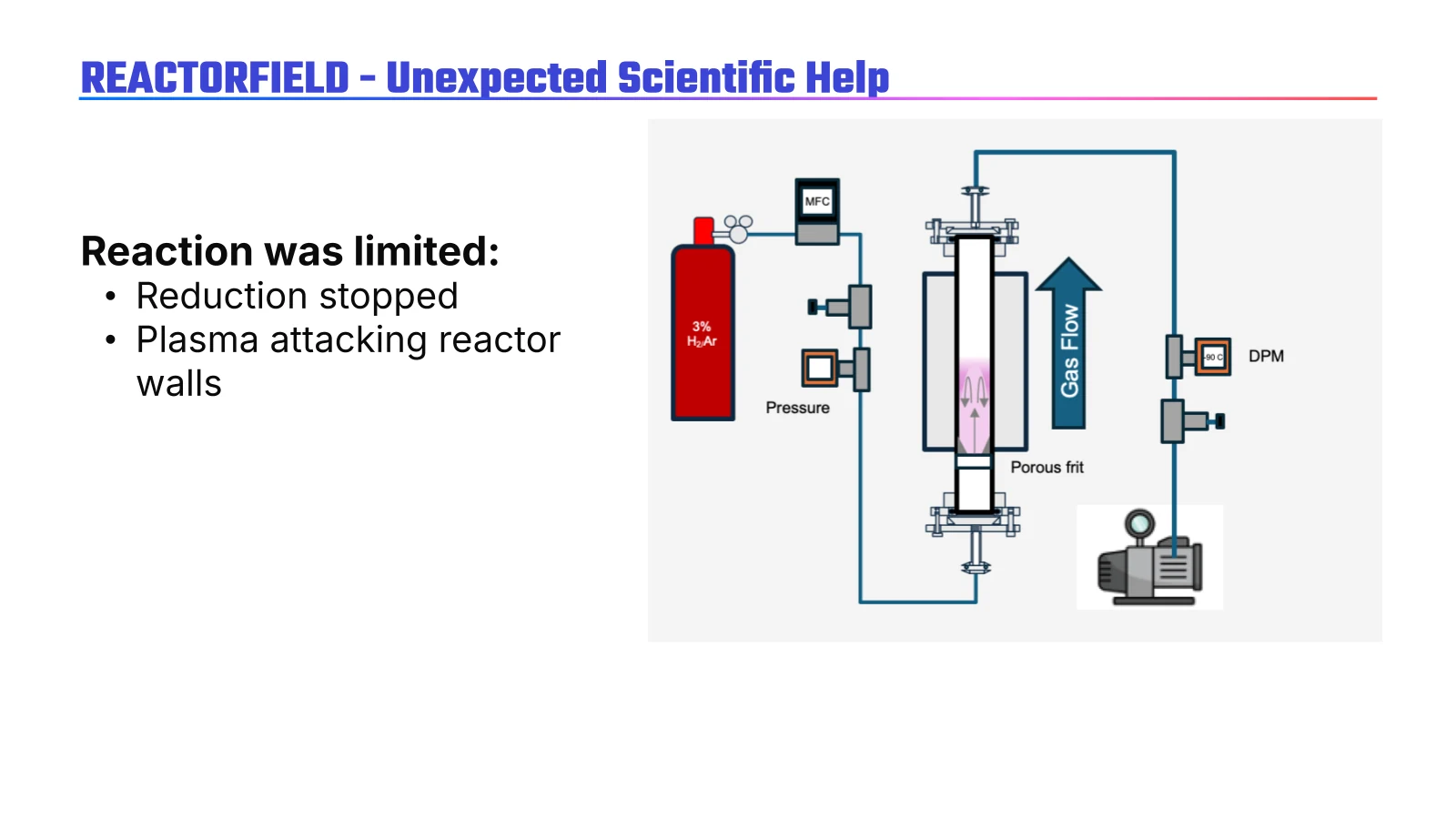
Bullard said Radify was adapting work originally developed at NASA for a different purpose. A tube passes through a microwave bought from Amazon; at reduced gas pressure with added hydrogen, the plasma splits hydrogen molecules into reactive hydrogen atoms that remove oxygen from the oxide, and water vapor carries the oxygen away. In Bullard’s reactor the water appeared, then the reactions kept stopping halfway through. He brought that question to Reactorfield’s first cohort, and found a surprising answer.
The reactor wall explained the stalls, and Claude skills cleared the backlog
- The quartz reactor wall material was stalling the reactions. Over several days of conversations with Claude, Bullard concluded that hydrogen radicals were reducing the silica in the quartz reactor walls to silicon, producing additional water and interfering with the intended reaction. The vessel had become a participant in the chemistry.
-
Five weeks of analysis cleared in 48 hours. Bullard learned to write Claude skills, reusable instructions for a task the system performs repeatedly; his workflow gathered experimental data, processed it and assembled a summary report. The 48-hour figure describes clearing an accumulated backlog rather than a controlled comparison between two identical experimental cycles.
-
Finished experiments informed the next experimental run. Bullard told Demo Day that the delay had meant he was failing to use completed experiments to inform the next set. After the program, he implemented skills and data processing automations to process the reactor data & inform the next run.
-
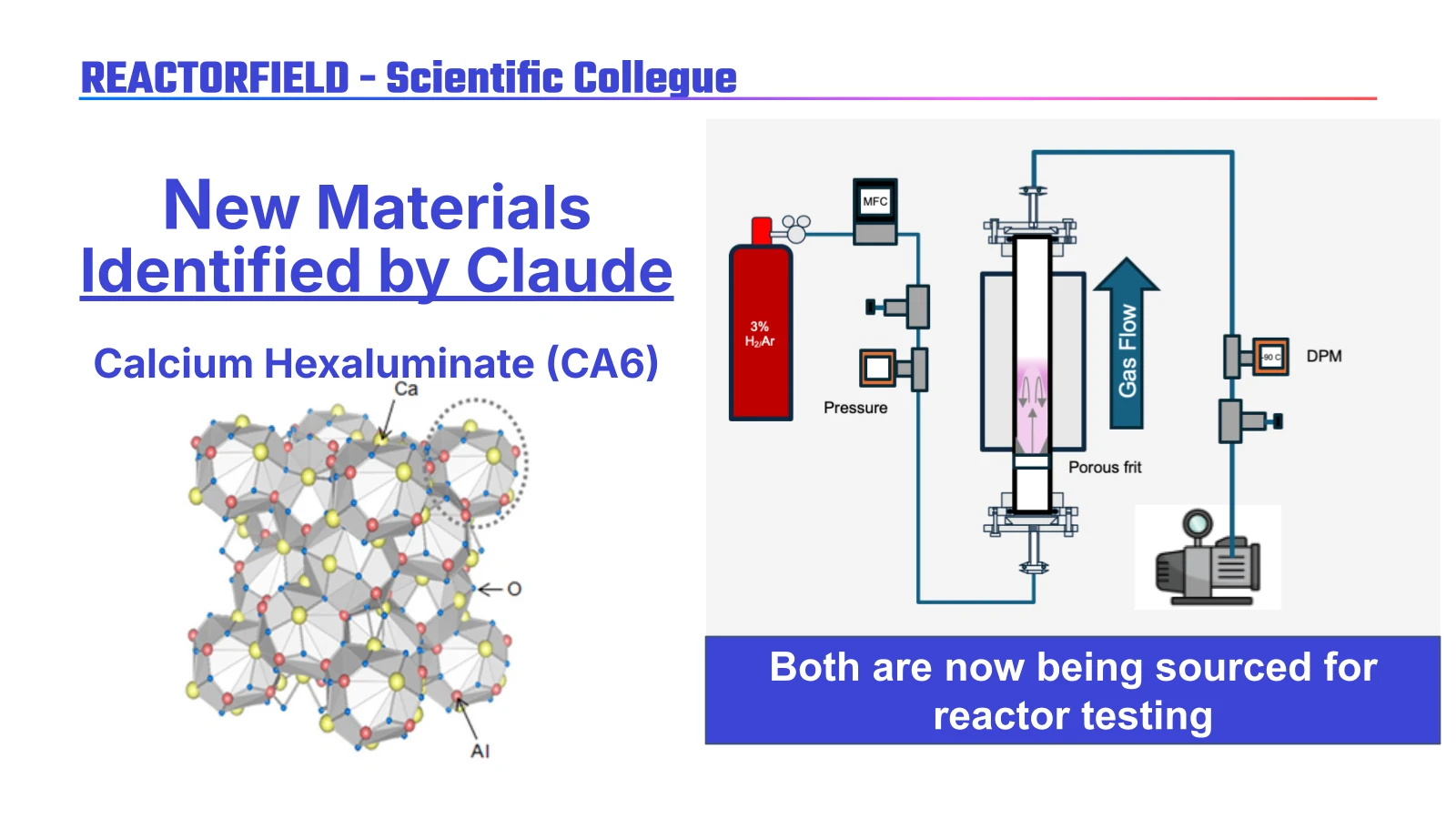
Calcium hexaluminate was discovered by AI to fix his stalling reactions. Claude helped find replacement materials that remain stable at high temperatures, allow microwaves through, survive the chemistry that attacked quartz, while not reacting with the metals or their chemistry.
-
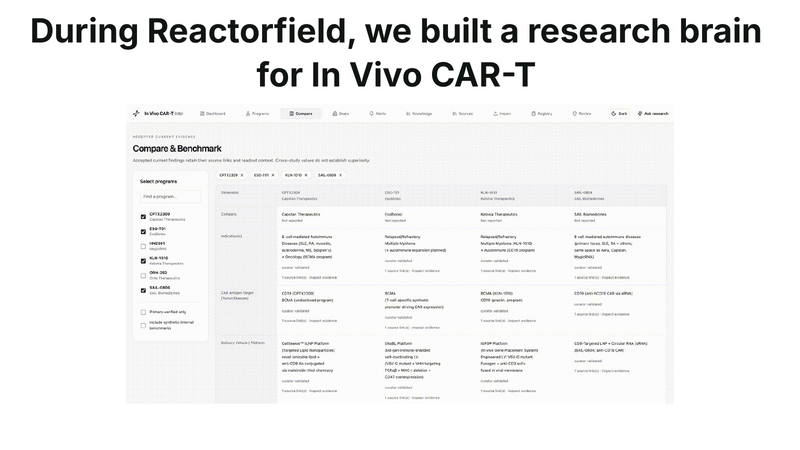
AI became a daily tool for Bullard. At the start, he said, even calling him a novice was generous. By Demo Day he was using AI daily.
-
A flow-model built for digital exploration. After the cohort, Bullard began a computational fluid dynamics model built from an existing reactor’s dimensions, the tube’s position inside the microwave and information about gas flow. This is their first step toward a digital twin.
A digital twin and predictive reactor model
Bullard’s longer-term aim is a digital twin, a computational representation of the reactor that he wants to use to increase the pace of learning. He wants to connect powder properties and operating conditions to reaction rates, including the effect of doubling particle size. A model that earns predictive value against reactor measurements could help Radify choose whether to change its powder feed, gas flow or vessel geometry before committing to a physical redesign.